Group 1: The Discoverers (0–1 Years)

Focus: Sensory Awakening, Bonding, and Early Language

  1. Bonding through Sound: We Use music as a "bridge" for non-verbal communication, strengthening the emotional connection between you and your baby.
  2. Language Foundations: Early exposure to varied rhythms and phonemes (the building blocks of speech) to kickstart your baby's language acquisition.
  3. Cognitive Memory: We use repetitive melodic patterns and nursery rhymes to build early memory, anticipation, and pattern recognition.
  4. Physical Awareness: Gentle movement with scarves and instruments provides "proprioceptive input," helping babies understand where their body is in space.
  5. Visual Tracking: Watching instruments, sensory lighting, and peer movement to help develop focus and early visual skills.
  6. Tummy Time Motivation: We use engaging sounds and tactile instruments to make Tummy Time a fun, musical adventure.

_____________________________

Group 2. The Explorers (1-2 Years)

Focus: Self-control and rhythm.

  1. Impulse Control (Stop/Go): Games like "Freeze Dance" or instruments that stop on a cue. This is a foundational executive function skill.
  2. Gross Motor Skills: Crossing the "midline" (e.g., reaching a shaker from the left hand to the right side) which is crucial for later skills like writing and dressing.
  3. Social Mimicry: At this age, toddlers learn by watching peers. Music groups provide the first "classroom" experience where they learn to take turns with instruments.
  4. Confidence & Autonomy: Giving them "choice" songs (e.g., "should we shake the bells fast or slow?") builds early decision-making confidence.
baby brain development sensory music

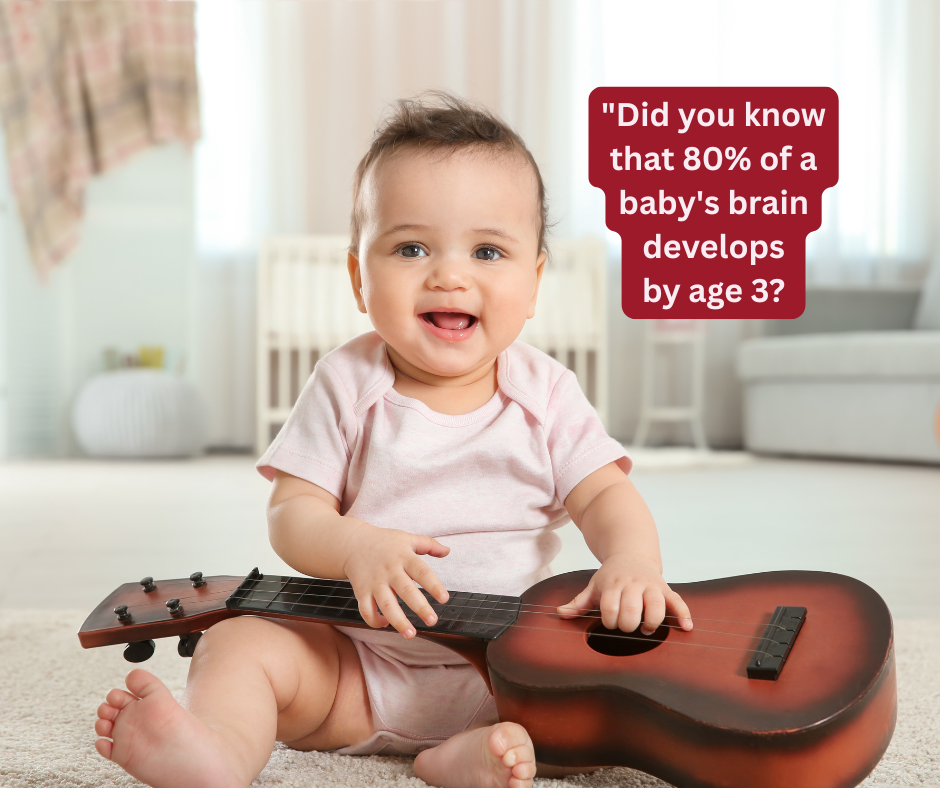
Our classes are designed to stimulate the billions of neural connections being formed through synchronized movement, auditory processing, and social play."

Frequently Asked Questions

1. My baby is very active/crying/sleeping. Can I still attend? Absolutely! Our sessions are entirely child-led and designed to be a "no-pressure" zone. If your baby needs a nap, a feed, or a diaper change during the class, please do whatever makes you both comfortable. We embrace the "beautiful chaos" of early childhood—there is no such thing as a "disruptive" baby here.

2. What should I bring to the class? You don’t need any special equipment! We provide all sanitized instruments and sensory props. We recommend wearing comfortable clothes (for both you and baby) as we usually sit on mats on the floor. For our Lough Key classes, don't forget your walking shoes if you plan to join us for the lakeside stroll afterward!

3. What happens if we miss a class due to illness? We know that "crèche coughs" and sniffles happen! While we cannot offer refunds for individual missed sessions within a block, we do our best to offer you a "catch-up" slot in another session during the same term (subject to availability). Just send us a quick message to let us know you can't make it.

4. Is the venue buggy-friendly and accessible? Lough Key Forest Park is fully accessible. There is ample space for buggy parking, and nearby changing facilities and café areas for your convenience.

5. Can dads, grandparents, or childminders come instead of the mother? Of course! We welcome all primary caregivers. Whether it’s Mum, Dad, Nana, or a childminder, the goal is to foster a bond between the child and the adult present. It’s also a great way for different family members to learn the songs we use so they can be repeated at home!

6. Do I need to be "musical" to join in? Not at all! You don’t need to be a professional singer or musician. Your baby doesn't care if you're "in tune"—they just love the sound of your voice. The classes are about participation and play, not performance.

Shopping Cart

    Your cart is empty